
Sanyog Mehra: Transforming Waste Management into a Strategic Advantage
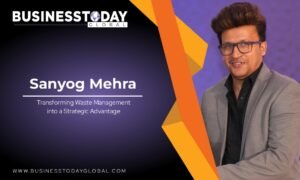
Helping companies shift from reactive waste handling to thoughtful circular systems.
A pile of mixed waste beside a busy market can look ordinary to many people. Workers rush past it, shopkeepers adjust to it, and life moves on. For those who understand this industry, scenes like this show how habits shape cities. They also show how much value lies inside things people throw away. This everyday sight connects deeply with the journey of Sanyog Mehra, who chose to see possibility where others see burden.
Sanyog Mehra carries a clear belief that sustainability is an opportunity to reshape how communities and businesses live with the environment. He always felt that caring for the planet is an operational and ethical responsibility that can guide industries toward smarter ways of working. His background in operations and business strategy sharpened this view. While studying how different sectors function, he understood that the waste management space in India was fragmented, reactive, and often treated as an afterthought.
His motivation to step into this field came from a simple idea. Waste holds value until the moment someone chooses to ignore it. Every material still carries energy, effort, and purpose within it. With the right mix of technology, systems, and intent, it can return to the economic cycle and support fresh growth. This idea grew into the seed that later became Ye Prayas Pvt. Ltd., a tech-integrated initiative that aims to turn discarded items into opportunities and turn climate challenges into business possibilities.
Sanyog Mehra formed Ye Prayas with a mission that is both practical and ambitious. The goal is to create measurable environmental impact while also driving profitability for organizations that choose responsible action. He believes responsible practices can guide industries toward cleaner pathways while strengthening economic outcomes at the same time.
Through Ye Prayas, Sanyog Mehra encourages businesses to rethink how they handle materials, energy, and long-term planning. His work helps them shift from reactive steps to thoughtful systems. He brings focus, clarity, and steady intent to a sector that deeply influences the future of India’s cities.
Sanyog Mehra moves forward with the belief that every piece of waste carries a chance for renewal. His journey shows a mindset that sees worth in every discarded thing and a future shaped by purpose and care.
Let us learn more about his journey:
Inside the Idea Pool
Sanyog Mehra describes Ye Prayas as a giant pool of thoughts, and within this pool, ideas move with a steady rhythm. On any ordinary day, teams across operations, compliance, technology, and marketing are brainstorming, analyzing, and refining solutions.
Ideas at Ye Prayas do more than coexist. They collide, merge, and evolve. A discussion on waste logistics can lead to a fresh carbon accounting model. A technology prototype for compliance tracking can grow into a client-facing sustainability dashboard. The environment values every thought, and innovation stays free from limits placed on any single department. It remains the daily language of the organisation.
This is what keeps Ye Prayas agile. It is a culture where creativity meets accountability.
Climate Action as a Strategic Advantage
Reflecting on the stage when climate action began to appear as a profitable path rather than a charitable effort led him to revisit a key experience that shaped his view. The shift in Sanyog’s belief took shape during a large-scale corporate waste audit for an MNC that treated sustainability as a CSR checkbox. His team showed the company how improved waste segregation and recycling could lower raw material costs, reduce compliance risks, and strengthen ESG scores that investors value.
This became the moment when he saw climate action as a clear competitive advantage rather than a cost.
He explains that the charity lens around sustainability has long prevented industries from seeing the business strength within environmental responsibility. At Ye Prayas, he works to challenge this mindset. His aim is to place sustainability at the center of business strategy, turning it into a practical and rewarding approach. When sustainability and profitability move together, adoption becomes natural, scalable, and lasting.
Living the Motto Tareeke Badlo, Sapne Nahi
The phrase Tareeke Badlo, Sapne Nahi expresses the spirit of innovation at Ye Prayas and influences everyday decisions across the team.
Sanyog Mehra believes every team member receives encouragement to find new ways of solving old problems. Whether the task involves waste logistics, compliance, or data integration, the team pushes itself to rethink conventional methods.
He shares a simple example. Instead of manual tracking of waste flow, the team built a technology enabled compliance dashboard that offers clients real time visibility into their sustainability performance.
This motto forms the work ethic as well. It represents persistence with flexibility. The team may adjust methods, and the dream of a circular and sustainable India stays steady in every effort.
Meaning of a Livable Planet as a Shared Corporate Goal
Treating the idea of a livable planet as something concrete rather than a distant dream, Ye Prayas views this vision as a strategic goal shaped through measurable indicators.
- Reduction in waste diverted from landfills
- Compliance rate improvement for corporates
- Increase in resource recovery and recycling.
- Reduction in carbon emissions through responsible disposal
He states that internal dashboards record every ton of waste managed and every kilogram of carbon offset through their sister company, OffsetGo. In his view, this approach creates a balance between business growth and environmental responsibility and shows that sustainability can remain both measurable and manageable.
Navigating Purpose And Profit In Corporate Partnerships
Talking about moments when corporate partnerships tested his philosophy of aligning purpose with profit, he shared the following in his own words:
“Many times. Especially when dealing with large corporations that prioritize short-term cost savings over long-term environmental returns.”
In such moments, they rely on data and transparency. They show them the economic case for sustainability, how non-compliance penalties, brand damage, and operational inefficiencies outweigh the investment in sustainable practices. It is not always an easy conversation, but they never compromise on integrity. Their approach has always been consultative, not persuasive. The goal is alignment, helping businesses see that profit and purpose are not competing forces, but complementary ones.
Practical Action and Behavioral Shift in Climate Response
He stated that Ye Prayas serves both aims with clear intent. These aims include practical action through waste management, compliance automation, carbon tracking, and circular solutions, along with behavioral transformation across corporations, employees, and supply chains.
He explained that workshops, training sessions, and digital tools guide clients toward conscious decisions driven by responsibility and genuine purpose. He added, “We believe technology alone cannot drive sustainability; mindset is the true multiplier.”
How He Measures Deep and Lasting System Shifts
Clarifying what helps him understand when an intervention moves past short-term results into real system transformation. Sanyog Mehra states that the clearest signal appears when clients progress from simple compliance to sincere commitment. When an organisation that once sought his support for waste disposal begins setting its own Net Zero goals, publishes ESG reports, or introduces carbon pricing, he sees evidence of a meaningful shift.
He shares the indicators his team follows, which include
• Waste diverted from landfills
• CO₂ emissions avoided
• EPR credits generated
• Corporate policy changes introduced after collaboration
He explains that long term change takes root when sustainability becomes an integrated part of daily operations rather than a surface level requirement.
Identifying Genuine Climate Commitment
Identifying genuine climate alignment from polished sustainability messaging is crucial, especially when greenwashing creates major confusion.
Sanyog Mehra shares that genuine climate alignment means action with accountability. He looks for three things.
- Traceability. The company must demonstrate its impact with data.
- Transparency. Reports must receive verification from independent auditors.
- Consistency. Sustainability actions must continue through the year instead of appearing only in select periods.
At Ye Prayas, he supports companies as they move from declarations to documentation. For him, a green identity relies on habits, data, and measurable results rather than hashtags or surface signals.
The Place of Failure in a Mission of Environmental Problem Solving
In response to a mission that depends on continuous environmental problem-solving, he shares that failure is part of their DNA because it teaches agility. His team has had projects that struggled to scale as expected or technologies that required re-engineering. In each case, the lesson was invaluable. Environmental innovation demands experimentation, and experimentation invites failure.
He explains that the team treats failures as prototypes for success, openings to adapt and grow. For him, what carries the greatest weight is resilience with reflection.
Sustaining Imagination in Climate Emergency Work
Explaining how Ye Prayas maintains imagination while working with urgent and data-heavy climate challenges, Sanyog Mehra shares that the organisation balances urgency with inspiration. The team keeps imagination alive by celebrating impact. Each month, the members review real-world outcomes such as waste diverted, emissions reduced, and trees saved. This practice helps everyone remember that every figure represents lives, ecosystems, and future generations.
He adds that cross-department collaboration and creativity challenges also play an important role. The blend of technical minds and field experts keeps perspectives fresh and ensures that solutions remain centered on people.
Difference in Approach to UN Goals
Discussing the difference between the UN approach and his own, he explains that the UN works at a policy and macro level, setting global frameworks, while his method relies on micro action at scale.
He states that Ye Prayas operationalizes sustainability on the ground:
- For a factory ensuring its waste is compliant
- For a tech firm tracking its carbon footprint
- For an SME managing its EPR obligations
“We align with the UN Sustainable Development Goals (SDGs) but localize them for businesses. In short, we convert ambition into action,” says Sanyog.
Redefining Waste in the Next Decade
“In ten years, we want the word ‘waste’ to disappear from business vocabulary.
Our vision is to build an economy where every discarded item is a resource in transition, not an end of life. Through technology, policy alignment, and behavioral change, Ye Prayas aims to make circularity the default, not the exception.
We envision a world where waste becomes data, data becomes insight, and insight becomes innovation, powering a cleaner, smarter planet.” – Sanyog.