
DVT – Turn the Table Dr. Ignacio Bonasa Alzuria on the movement that transforms pain into vitamin for the soul and brings resilience, leadership and cultural renewal into companies
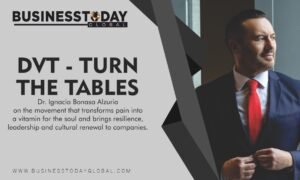
“DVT is born from a simple but demanding belief: what hurts us can also educate us, awaken us and become a source of strength for individuals, teams and organizations.”
Every era needs a language for its wounds. In a time marked by uncertainty, exhaustion, acceleration and emotional fragmentation, Dr. Ignacio Bonasa Alzuria has created one of his most personal and powerful movements: DVT – Dale la Vuelta a la Tortilla, internationally expressed as Turn the Table. It is a movement, a philosophy and a methodology built around a radical idea: adversity does not have to be the end of energy; it can become vitamin for the soul.
DVT was born from a deep personal and professional conviction. Dr. Bonasa has seen people, leaders and organizations break down under pressure, but he has also seen them discover unexpected strength when they reinterpret their story. DVT does not deny pain. It does not sell superficial optimism. It proposes something more demanding: to look at difficulty, give it meaning, learn from it and convert it into conscious action.
For companies, this message is especially relevant. Many organizations speak about transformation, but not enough about the emotional cost of transformation. They speak about agility, but not always about fear. They speak about innovation, but not always about fatigue. DVT brings those realities to the center and turns them into a structured path for leaders, teams and corporate cultures.
In this cover story, Dr. Bonasa explains the origin of DVT, its corporate applications, its relationship with leadership and well-being, and how companies can use the movement to create more resilient, conscious, courageous and human organizations.
Dr. Bonasa, what is DVT – Dale la Vuelta a la Tortilla?
DVT is a movement that invites people, teams and organizations to transform adversity into growth, pain into learning and difficulty into vitamin for the soul. In English, I like to express it as Turn the Table because it captures the idea of changing the meaning of what happens to us. We cannot always choose the event, but we can work on the interpretation, the attitude and the action that follow.
DVT is not naive optimism. It is not about saying that everything is fine when it is not. It is about refusing to let pain have the final word. It is about asking: what can this teach me? What kind of leader can emerge from this? What kind of team can we become after this crisis? That is the heart of the movement.
Why did you feel the need to create this movement?
Because I have always believed that pain can either close a person or open a person. It can make us bitter, defensive and resigned, or it can become a teacher. My own journey has taught me that the most decisive transformations often begin in moments that were not chosen. The question is whether we allow those moments to define us negatively or whether we convert them into a source of meaning.
I created DVT because many people need permission to begin again. Many leaders need a language to speak about vulnerability without losing authority. Many organizations need a methodology to address fatigue, fear, conflict and uncertainty without reducing them to technical problems. DVT offers that language. It says: yes, this hurts; yes, this is difficult; but we can turn it into movement.
How does DVT enter the corporate world?
DVT enters the corporate world because companies are living organisms, not machines. They accumulate pressure, disappointments, failures, conflicts, mergers, crises, restructurings, changes of strategy and emotional wounds. If those experiences are not processed, they become cynicism, disengagement or resistance. DVT helps organizations reinterpret those experiences and convert them into learning and action.
In companies, DVT can take the form of leadership programs, team workshops, resilience journeys, cultural transformation processes, well-being experiences, keynote conferences and executive retreats. It can be adapted to senior leaders, middle managers, teams in transition, organizations after crisis, or companies that simply want to cultivate a more courageous and positive culture. The core remains the same: turn difficulty into conscious strength.
What kind of corporate programs can be built around DVT?
DVT can be structured as a family of corporate programs. DVT Leadership helps leaders turn pressure into maturity and fear into responsible action. DVT Teams helps groups transform conflict, fatigue or fragmentation into trust, cohesion and shared purpose. DVT Organization helps companies rethink cultural wounds and convert them into new ways of working. DVT Well-Being connects emotional resilience with sustainable performance. DVT Society expands the message toward social responsibility and collective impact.
These programs are not isolated motivational sessions. They can be designed as learning journeys, combining inspiration, diagnosis, experiential workshops, artistic dynamics, individual reflection, team commitments and follow-up. The objective is to make DVT a practical corporate language: a way of speaking, deciding and acting when reality becomes difficult.
How is DVT different from traditional resilience training?
Traditional resilience training often focuses on resistance: how to endure more. DVT goes further. It is not only about enduring. It is about transforming. Endurance can keep someone standing, but transformation gives meaning to what has been lived. DVT asks people and organizations not only to survive adversity, but to extract wisdom, dignity and energy from it.
Another difference is the emotional and symbolic dimension. DVT uses narrative, metaphor, art, conversation and experiential learning. It helps people rewrite the internal story around difficulty. A person who says “this destroyed me” does not behave like a person who says “this taught me something and gave me a mission.” That change in narrative can change behavior, leadership and culture.
What role does art play in DVT?
Art helps DVT become more than a concept. Pain, resilience and transformation are not only intellectual issues. They live in the body, in memory, in emotion and in imagination. Art allows participants to express what is difficult to say directly. It creates images, sounds, scenes and symbols through which people can understand their experience differently.
A painting can become a mirror of a team’s emotional climate. Music can reveal harmony, dissonance and listening. Theatre can stage conflict and courage. Literature can help leaders recognize the hero’s journey in their own professional path. Through art, DVT becomes memorable. It gives the movement beauty, depth and humanity. That is essential because transformation must be felt, not only understood.
How can CEOs use DVT inside their organizations?
CEOs can use DVT as a cultural message and as a practical methodology. As a message, it tells people that difficulty will not be hidden, denied or treated as failure. It will be transformed into learning. That already creates a healthier culture. As a methodology, DVT can be implemented through leadership journeys, storytelling sessions, team resets, crisis debriefs, values workshops and well-being programs.
The CEO’s role is decisive because DVT must not become a slogan. If top leadership does not embody the ability to turn adversity into responsible action, the program loses credibility. A CEO who uses DVT well says: we have faced difficulty, but we are not victims of it. We will learn, adapt, care for one another and move forward with more consciousness.
What benefits can companies expect from DVT programs?
The first benefit is a change in attitude. People move from passive complaint to active interpretation. The second is emotional language. Teams learn to speak about what hurts, what blocks them and what they need to move forward. The third is renewed cohesion. Shared adversity, when processed well, can become a source of unity.
There are also strategic benefits: more resilient leadership, stronger cultures, better change management, higher engagement and greater capacity to recover from crisis. DVT can help reduce the hidden cost of unprocessed emotional fatigue. It can also strengthen employer brand because people increasingly want to work in organizations that know how to care, not only how to demand.
How does DVT connect with your broader philosophy of leadership with soul?
Leadership with soul is the ability to generate results without losing humanity. DVT is one of the most concrete expressions of that philosophy because it addresses what leaders often avoid: pain, fear, failure, uncertainty and emotional fatigue. A leader with soul does not pretend that these realities do not exist. A leader with soul gives them meaning and converts them into action.
DVT also connects with the 4A vision: Learning, Attitude, Soul and Action. Adversity becomes learning. Learning requires attitude. Attitude must be connected to soul, meaning and dignity. And all of it must lead to action. Without action, transformation remains a beautiful idea. DVT is designed to move people from reflection to commitment.
Can DVT be used in organizations that are not in crisis?
Absolutely. DVT is not only for crisis. It is also for prevention, cultural strengthening and leadership development. Every organization has hidden difficulties: conversations that are avoided, fatigue that is normalized, talent that is losing enthusiasm, values that are declared but not lived. DVT can help bring those issues to light before they become deeper problems.
In healthy organizations, DVT can be used to cultivate a stronger mindset: the capacity to learn continuously, to respond to mistakes with maturity, to face change with courage and to maintain hope without losing realism. It is a vaccine against victimhood, cynicism and emotional resignation. It teaches people and teams to say: we can turn this around.
What makes DVT attractive from a market perspective?
DVT is attractive because it responds to a real and growing need. Companies are investing in well-being, resilience, leadership, culture and change management, but they often need a more powerful narrative to connect those themes. DVT provides that narrative. It is simple, emotional, memorable and adaptable. It can be used in conferences, programs, campaigns, workshops, books, digital content and corporate academies.
It also has a strong human brand. Turn the Table is easy to understand across cultures: something happens, and we decide not to be defeated by it. That message is universal. For companies, DVT offers a distinctive way to work on resilience without sounding generic. It has emotional force, methodological depth and commercial scalability.
What is your long-term ambition for DVT?
My ambition is for DVT to become a global movement that helps people, teams, companies and societies reinterpret adversity. I want it to be present in organizations, schools, universities, associations, leadership forums and social initiatives. Pain is universal, but so is the possibility of transformation.
In the corporate world, I want DVT to become a reference for companies that do not want to manage change only from processes, but also from humanity. The organizations of the future will need technology, strategy and efficiency, but they will also need meaning, resilience and soul. DVT can help them build that inner muscle.
What final message would you give to companies considering DVT?
I would tell them that every organization has a story. Some chapters are successful, others painful, others unfinished. The question is not whether difficulty will appear. It will. The question is what the organization will do with it. Will it hide it? Will it suffer it silently? Or will it turn it into learning, culture and strength?
DVT is an invitation to choose the third path. It is a call to transform wounds into wisdom, pressure into maturity and fear into collective courage. A company that learns to turn the table does not become invulnerable. It becomes more conscious, more united and more capable of moving forward with soul. That is the kind of company the future needs.
How can HR and learning leaders translate DVT into an annual corporate agenda?
DVT can become a complete annual agenda rather than a one-time event. A company may begin with a keynote to introduce the language of Turn the Table, continue with leadership workshops, then move into team sessions focused on specific challenges and finally integrate the methodology into well-being, culture and change management programs.
The key is to connect DVT with real corporate moments: a strategic change, a merger, a difficult year, a cultural renewal process, a leadership transition or a need to rebuild energy. When DVT is linked to real business life, it stops being abstract and becomes a practical way to face what people are already living.
What emotional promise does DVT offer to employees?
The emotional promise is that their difficulty will not be ignored. Many employees feel that companies want their productivity but not their story. DVT says something different: your story matters, your pain can teach, your fatigue deserves attention and your capacity to begin again is part of your talent.
That message can have enormous power. People do not need companies to solve every personal problem, but they do need workplaces where humanity is not treated as weakness. DVT gives employees a language of dignity and responsibility. It does not invite them to remain victims. It invites them to recover agency.
How does DVT help organizations build a culture of hope?
Hope is not passive. Hope is organized energy. A culture of hope does not deny problems; it believes that problems can be faced. DVT helps organizations build that culture by creating rituals, conversations and learning experiences around the possibility of turning difficulty into growth.
In companies, hope must be connected to action. Otherwise it becomes rhetoric. DVT insists that every insight should lead to a decision, a commitment or a new behavior. That is why it is so powerful for corporate programs: it combines emotion, meaning and execution. It gives people a reason to move and a method to begin.