
Artificial Intelligence vs Human Intelligence: Transforming Business Sectors and Services
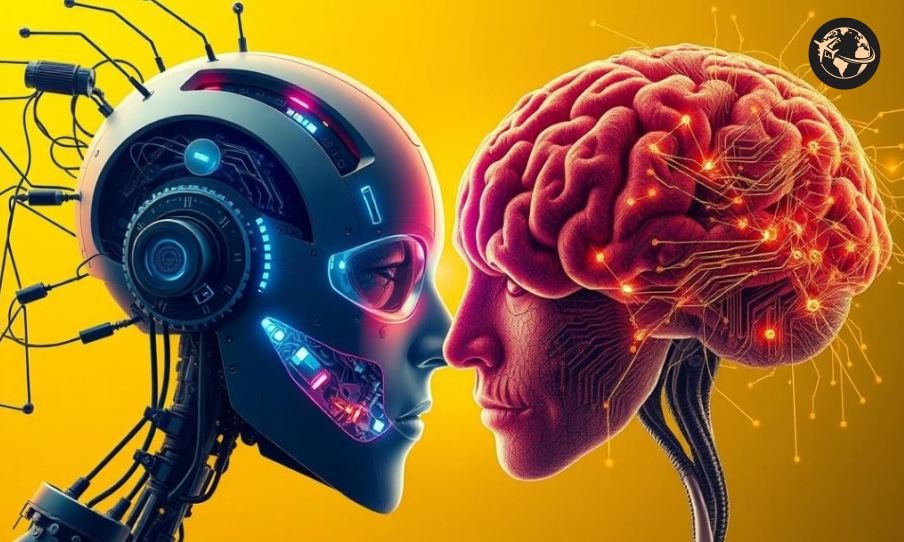
Artificial Intelligence (AI) changes work. Human Intelligence (HI) adapts with it. Both interact in daily life. Both influence how industries grow. The question is not who wins, but how they align. AI brings speed and scale. Humans bring context and meaning. Together they reshape business.
AI and Human Intelligence: Core Differences
AI processes data fast. It identifies patterns. It predicts outcomes. Its strength lies in automation.
HI works with intuition. It interprets signals. It creates connections across ideas. Its strength lies in creativity and empathy.
In simple terms:
- AI = Machine speed + Precision
- HI = Human depth + Understanding
The Business Landscape Under Change
1. Finance
AI detects fraud. It automates trading. It manages credit scoring. These tasks depend on data volume. Machines handle them better.
HI interprets financial policy. It weighs ethical impact. It guides regulation. People decide where to apply AI.
Dependency view: AI → process → transactions. Humans → govern → outcomes.
2. Healthcare
AI scans images. It detects disease. It predicts patient risks. Machines improve accuracy in diagnosis.
HI communicates with patients. It explains results. It provides emotional support. Trust depends on humans.
Dependency view: AI → support → doctors. Humans → comfort → patients.
3. Retail and Services
AI personalizes ads. It forecasts demand. It manages logistics. Efficiency grows.
HI designs brand voice. It builds customer trust. It handles conflicts. Relationships grow.
Dependency view: AI → optimize → systems. Humans → connect → people.
4. Manufacturing
AI monitors production. It predicts equipment failure. It improves safety.
HI solves complex breakdowns. It rethinks process design. It negotiates with stakeholders.
Dependency view: AI → predict → faults. Humans → redesign → systems.
5. Education
AI automates grading. It adapts learning content. It provides data to teachers.
HI motivates students. It understands emotions. It inspires curiosity.
Dependency view: AI → assist → teaching. Humans → inspire → learning.
Collaboration, Not Competition
A false debate frames AI against HI. The better frame is synergy. Machines excel at repetition. People excel at adaptation. When both align, outcomes improve.
Example: Healthcare Synergy
AI → detect → cancer cells.
Human → decide → treatment plan.
Together → improve → survival rate.
Example: Finance Synergy
AI → flag → suspicious activity.
Human → investigate → fraud case.
Together → reduce → financial crime.
Risks of Overreliance on AI
AI can misjudge. Bias in data leads to bias in results. Lack of transparency reduces trust. Without human oversight, mistakes spread fast.
HI checks AI output. People see nuance. They apply ethical reasoning. They ensure fairness.
Dependency view: AI → risk → bias. Human → correct → error.
Human Skills in the Age of AI
As AI expands, human skills grow more valuable. Key areas:
- Critical Thinking: interpret machine output.
- Creativity: generate fresh ideas.
- Ethics: decide responsible use.
- Empathy: build trust with customers.
Dependency view: AI → extend → efficiency. Human → extend → value.
Future Outlook
Business sectors will not choose AI or HI. They will design systems where both interact.
AI will keep improving in speed, scale, and accuracy.
HI will keep leading in ethics, meaning, and purpose.
The near future shows hybrid models:
- Finance → AI algorithms + human auditors.
- Healthcare → AI diagnosis + human care.
- Education → AI tutors + human teachers.
- Retail → AI personalization + human empathy.
Dependency summary: AI → empower → systems. Humans → empower → society.
Conclusion
Artificial Intelligence changes business. Human Intelligence keeps it human. The two work better together. Machines drive efficiency. People drive meaning.
The future of business will not be about machines replacing humans. It will be about humans using machines.
AI and HI, side by side, reshape industries. They transform finance, healthcare, retail, manufacturing, and education. The result: faster services, deeper trust, and smarter growth.
In the end, intelligence is not a contest. It is a collaboration.