
Ignacio Campoy: Reimagining Education for a Workforce That Never Stops Learning
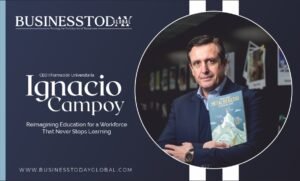
Education has long been regarded as one of society’s greatest equalizers, opening doors to opportunity and enabling individuals to shape better futures. Yet the expectations placed on education today are vastly different from those of even a decade ago. Technological disruption is reshaping industries at an unprecedented pace, new professions are emerging faster than traditional curricula can adapt, and the concept of a lifelong career has given way to a workforce that must continually learn, unlearn, and evolve.
For Ignacio Campoy, one of the defining challenges of modern education is ensuring that institutions respond to the real needs of students and the labor market without compromising academic rigor or depth. It is a challenge that requires far more than adopting new technologies; it demands a fundamental rethinking of how education is designed, delivered, and experienced.
Few leaders have approached this transformation with the same long-term vision as Ignacio Campoy. As the driving force behind Formación Universitaria Educational Group, he has spent more than two decades reshaping online education in Spain by championing a model built on flexibility, employability, academic excellence, and continuous innovation. Rather than viewing education as a destination, he has consistently advocated for a lifelong learning model that empowers individuals to adapt confidently to an ever-changing professional landscape.
Today, Formación Universitaria stands among Spain’s leading e-learning institutions, having educated hundreds of thousands of students across diverse disciplines. Yet for Campoy, the organization’s success has never been measured solely by enrollment numbers or institutional growth. It’s true achievement lies in creating opportunities, helping people acquire new skills, transform their careers, and unlock futures they once believed were beyond their reach.
A Vision Built Around Human Potential
Every successful organization begins with a defining belief, and for Ignacio Campoy, that belief has remained remarkably consistent throughout his career: education is not merely about transferring knowledge; it is about developing people.
Early in his professional journey, he realized that learning has the power to create opportunities, foster talent, and support meaningful change. That conviction has guided every strategic decision he has made and continues to shape the purpose of Formación Universitaria today.
While knowledge provides the foundation, its real value emerges only when it builds confidence, expands opportunities, and enables individuals to navigate an increasingly unpredictable world. Education, in Campoy’s view, should never be designed around institutional convenience or rigid academic structures. Instead, it must respond to the realities of people’s lives.
Modern learners are rarely full-time students. They are professionals balancing demanding careers, parents managing family responsibilities, entrepreneurs building businesses, and individuals seeking to reinvent themselves without putting their lives on hold. Recognizing these realities fundamentally transformed how Formación Universitaria approached education.
Rather than asking students to fit into traditional systems, Campoy challenged his organization to build educational systems that fit around students. Flexibility, accessibility, and academic excellence were no longer independent objectives; they became inseparable pillars of the learning experience.
This student-first philosophy has become one of the institution’s defining strengths, reinforcing its commitment to delivering meaningful, career-oriented education while maintaining uncompromising academic standards.
Seeing the Future Before Others Did
Long before digital education became a global necessity, Ignacio Campoy recognized that the future of learning would extend far beyond the physical classroom.
At a time when distance learning was often viewed as a secondary alternative to conventional education, he identified a significant opportunity that many institutions had overlooked. Thousands of people wanted to improve their qualifications, advance professionally, or redirect their careers, yet traditional education offered little flexibility for individuals balancing work, family, and other responsibilities.
Where others focused primarily on institutions, Campoy focused on students.
He recognized that high-quality, flexible, employment-oriented education adapted to real life could remove geographical, professional, and personal barriers that had prevented countless individuals from pursuing further education.
Equally important, he understood that successful e-learning required much more than transferring classroom lectures to digital platforms. Online education demanded its own methodology, one capable of engaging learners, adapting to different learning styles, providing continuous academic support, and producing measurable professional outcomes.
That insight became one of the organization’s most important competitive advantages.
Instead of digitizing traditional teaching models, Formación Universitaria reimagined the entire educational journey. Course design, student support, academic monitoring, assessments, and learning methodologies were developed specifically for online education rather than adapted from conventional classrooms.
Years before digital learning became mainstream, Campoy had already positioned the institution to meet the growing demand for flexible, high-quality education without compromising academic rigor or the student’s experience.
Designing Education Around Real Lives
For Campoy, flexibility has never meant lowering standards. On the contrary, it means making high-quality education more accessible while preserving the rigor that gives learning its lasting value.
Students should never be forced to choose between pursuing professional ambitions and fulfilling personal responsibilities. Instead, education should integrate naturally into everyday life while maintaining the highest academic expectations.
This philosophy continues to distinguish Formación Universitaria in an increasingly competitive educational landscape. Every programme is designed with employability at its core, ensuring that learners graduate not only with theoretical knowledge but also with practical competencies that reflect the realities of today’s labor market.
As industries continue to evolve through digital transformation, employers increasingly seek professionals who combine technical expertise with adaptability, critical thinking, communication, collaboration, and a commitment to continuous learning. Preparing students for that reality has remained central to Campoy’s educational philosophy from the very beginning.
For him, learning is no longer a one-time milestone achieved through graduation. It is an ongoing journey that accompanies every stage of a professional career.
That conviction has not only shaped the evolution of Formación Universitaria but has also positioned Ignacio Campoy among the educational leaders helping redefine what meaningful learning looks like in the twenty-first century.
From Online Learning to Career Transformation
For Ignacio Campoy, education has never been about delivering courses or awarding qualifications. It’s true purpose lies in helping people transform their professional lives.
A diploma may open a door, but lasting success depends on an individual’s willingness and ability to keep developing long after formal education ends.
This belief has guided the strategic direction of Formación Universitaria from its earliest years. Rather than measuring success by the number of students enrolled, the institution has consistently focused on the long-term value it creates for every learner. Each programme is designed not only to provide academic knowledge but also to equip students with practical skills that respond to the rapidly evolving needs of employers and industries.
As digital transformation continues to reshape workplaces around the world, traditional qualifications alone are no longer enough. Organizations increasingly seek professionals who embrace lifelong learning, adapt confidently to change, solve complex problems, and contribute meaningfully to dynamic environments.
Recognizing this shift well before it became a mainstream conversation, Campoy positioned continuous learning at the heart of the institution’s educational philosophy.
The result is an organization that has evolved beyond being an education provider. Formación Universitaria has become a long-term learning partner supporting professionals as they enter the workforce, advance within their careers, or reinvent themselves through new knowledge, skills, and qualifications.
Leading Growth Without Losing Quality
Growth is often celebrated as a measure of organizational success yet sustaining that growth without compromising quality presents a far greater challenge. For Ignacio Campoy, expansion has never been an objective in itself. It has always been a responsibility.
As Formación Universitaria continued to grow, maintaining academic excellence became just as important as increasing its reach. Every new initiative, programme, and technological investment has been guided by a single principle: growth should strengthen the educational experience rather than dilute it.
This philosophy has shaped the institution’s long-term evolution. Continuous investment in academic methodology, digital infrastructure, student support, and quality assurance has enabled the organization to scale responsibly while preserving the standards that define its reputation.
Looking back, Campoy identifies four strategic decisions that fundamentally influenced the institution’s trajectory. The first was recognizing the long-term potential of flexible distance learning at a time when many questioned its credibility. The second was understanding that e-learning required its own methodology instead of simply digitizing traditional classroom teaching. The third was ensuring that employability remained central to every academic programme so graduates entered the workforce with skills aligned to real industry needs. Finally, he focused on building an organization capable of evolving continuously without losing its identity or commitment to quality.
Together, these decisions created a competitive advantage that extends far beyond technology. Years of experience, personalized academic support, a strong employability focus, and an organizational culture centered on excellence and responsibility have established Formación Universitaria as one of Spain’s most respected names in digital education.
Looking ahead, Campoy believes the next phase of growth must be defined by intelligent expansion—growing responsibly, embracing innovation, and strengthening ties with the labor market while ensuring that quality remains the institution’s greatest differentiator.
Building a Culture That Endures
Behind every successful institution is a culture that shapes how people think, collaborate, and respond to change. Campoy believes culture is not created through slogans displayed on office walls but through the decisions leaders make every day.
His leadership philosophy combines vision, flexibility, and genuine human understanding. In an environment where uncertainty has become the norm, effective leaders must provide clarity, build trust, and develop talented people while remaining adaptable enough to respond to changing circumstances.
Rather than attempting to control every aspect of a growing organization, Campoy focuses on surrounding himself with capable professionals, delegating responsibility, and creating an environment where initiative and expertise are encouraged.
Managing a large educational institution also requires discipline and perspective. He believes leaders must establish clear priorities, remain focused on what matters most, and deliberately reserve time for strategic thinking rather than becoming consumed by day-to-day operations. Long-term success, in his view, depends as much on thoughtful reflection as it does on decisive action.
The most difficult leadership decisions, he believes, are rarely about choosing between right and wrong. More often, they involve balancing present comfort with future sustainability. Protecting an organization’s long-term health may require difficult or unpopular choices, but true leadership lies in confronting those decisions with honesty, consistency, sensitivity, and respect for the people affected.
Navigating the Age of Artificial Intelligence
Few technological developments have generated as much discussion within education as artificial intelligence. While opinions often swing between boundless optimism and deep concern, Campoy approaches the subject with a balanced and pragmatic perspective.
He sees artificial intelligence as one of the most significant opportunities to improve education in decades. When implemented responsibly, AI can personalize learning pathways, adapt educational content to individual learning speeds, strengthen academic monitoring, streamline administrative processes, and provide educators with valuable insights that improve student outcomes.
These capabilities have the potential to make education more efficient, responsive, and accessible than ever before.
Yet technology, in his view, should never become the purpose of education. It remains an extraordinarily powerful tool; but still only a tool.
Artificial intelligence is also encouraging educators to rethink not only how learning is delivered but why particular knowledge and skills are taught in the first place. As technology assumes greater responsibility for routine tasks, education must increasingly focus on developing the uniquely human capabilities that machines cannot replicate.
Critical thinking, ethical judgment, creativity, communication, collaboration, emotional intelligence, adaptability, and complex problem-solving will become even more valuable in an AI-driven economy. Alongside these capabilities, professionals will also need strong digital literacy, data analysis skills, and a commitment to continuous learning to remain competitive throughout their careers.
For Campoy, artificial intelligence is not redefining the purpose of education; it is reinforcing it. The mission remains the same: empowering people with knowledge, confidence, and adaptability to succeed in a rapidly changing world.
Preparing Learners for Tomorrow’s Workforce
While technology continues to reshape how education is delivered, Ignacio Campoy believes the future of learning will ultimately be defined by its relevance.
The traditional assumption that education ends with graduation has become increasingly outdated. Careers evolve rapidly; industries reinvent themselves continuously, and professionals must be prepared to acquire new knowledge throughout every stage of their working lives.
Learning, therefore, is no longer a phase of life but an ongoing process.
This shift is transforming educational models around the world. Learning pathways are becoming increasingly modular, personalized, and flexible, allowing individuals to develop new competencies whenever changing industries require them. Rather than returning to education only, when necessary, professionals are embracing continuous development as an essential component of long-term career success.
At the same time, employer expectations continue to evolve. Technical expertise remains essential, but organizations increasingly value professionals who combine specialized knowledge with adaptability, communication, collaboration, creativity, resilience, and the confidence to solve complex challenges in uncertain environments.
Preparing students for lifelong adaptability, Campoy believes, may become the greatest responsibility of modern education.
Bridging Education and Employment
As industries continue to evolve, reducing the gap between education and employment has become one of the defining priorities for educational institutions worldwide.
Campoy believes this responsibility cannot rest solely with educators. Businesses, employers, and industry leaders must also play a more active role in developing future talent through genuine collaboration with academic institutions.
Continuous dialogue between education and industry ensures that programmes remain aligned with labor-market realities while preserving academic rigor and intellectual depth. Such partnerships also provide employers with greater confidence that graduates possess the practical competencies needed to succeed from day one.
Looking toward the next decade, Campoy expects significant opportunities to emerge across healthcare, technology and data analytics, cybersecurity, renewable energy, industrial automation, advanced logistics, and digital education. Preparing professionals for these rapidly evolving sectors will require educational institutions to remain agile, forward-looking, and deeply connected to industry needs.
For Campoy, the strongest educational institutions will not simply react to change—they will anticipate it, ensuring learners are prepared for careers that continue to evolve long after graduation.
Innovation Rooted in Purpose
Innovation has become one of the most frequently used words in modern business, yet it’s true value lies not in the technology itself but in the purpose it serves.
Throughout his leadership journey, Ignacio Campoy has maintained that meaningful innovation always begins with people. Digital platforms, artificial intelligence, and evolving educational methodologies can transform learning only when they are supported by a culture that values improvement, initiative, responsibility, and continuous learning.
This philosophy has shaped Formación Universitaria from its earliest days. Rather than treating excellence, integrity, responsibility, people’s orientation, and continuous improvement as corporate slogans, the institution has embedded these principles into everyday decision-making. They guide how programmes are developed, how students are supported, and how the organization continues to evolve in an increasingly dynamic educational landscape.
Such values provide stability in an environment defined by constant change. While technology continues to advance at remarkable speed, a strong organizational culture enables institutions to innovate confidently without losing sight of their identity or their responsibility to learners.
Campoy believes innovation should never exist simply for novelty. Every technological investment, every methodological improvement, and every strategic initiative should answer one essential question: How does this create a better learning experience and better opportunities for students? When innovation serves that purpose, it becomes meaningful and sustainable.
Education as a Force for Social Transformation
Beyond preparing individuals for employment, Campoy believes education carries an even greater responsibility; it has the power to transform lives.
Every learner represents an opportunity to expand what is possible. Education provides far more than qualifications; it builds confidence, develops autonomy, opens new opportunities, and enables individuals to create better futures for themselves, their families, and their communities.
This broader perspective has consistently influenced the direction of Formación Universitaria. The institution’s purpose extends beyond delivering academic programmes. It strives to create lasting value by helping people unlock their potential and adapt successfully to an ever-changing world.
Campoy also rejects the notion that financial performance and social impact exist in opposition to one another. In education, he believes they are complementary.
Sustainable profitability creates the resources needed to invest in stronger methodologies, advanced technology, improved student support, and continuous innovation. Purpose, however, is what gives those investments meaning. When educational institutions remain focused on improving lives while maintaining high academic standards, business success and social contribution naturally reinforce one another.
Creating a Legacy Beyond the Classroom
Ask Ignacio Campoy about the legacy he hopes to leave, and the conversation quickly moves beyond institutional size, market position, or commercial success.
His ambition is to build an organization that continues creating value long after his own leadership has ended with an institution recognized for its quality, adaptability, innovation, and positive impact on thousands of lives.
That long-term vision also shapes the advice he offers to aspiring educational entrepreneurs.
Education, he believes, is unlike any other industry because its greatest product is not information but human potential. Every decision made by an educational institution has the power to influence someone’s future. That responsibility demands integrity, quality, long-term thinking, and an unwavering commitment to serving learners.
For leaders entering the sector, innovation should never become an objective in itself. Instead, it should always be guided by a clear purpose: improving learning outcomes and creating meaningful opportunities for students.
Perhaps his most powerful reminder is also that his simplest education is not about selling a product. It is about helping shape people’s futures.
A Future Defined by Lifelong Learning
The world of work will continue to evolve. New technologies will emerge, industries will transform, and the skills demanded by employers will continue to change. Yet amid this constant disruption, one principle remains remarkably consistent: people who continue learning will always be better equipped to navigate change than those who rely solely on past knowledge.
That conviction has guided Ignacio Campoy’s leadership for more than two decades.
Through Formación Universitaria, he has championed an educational model that combines academic excellence, technological innovation, employability, and lifelong learning into a single vision one designed not simply to prepare students for their first job, but to support them throughout their entire professional journey.
As artificial intelligence reshapes industries and digital transformation accelerates, the institutions that will make the greatest difference will not necessarily be those that deliver information more efficiently. They will be those that cultivate curiosity, resilience, ethical judgment, adaptability, and the confidence to embrace continuous growth.
For Campoy, the future of education will not be defined by technology alone. It will be defined by relevance, responsiveness, and an unwavering commitment to helping people realize their potential in a rapidly changing world.
Ultimately, his greatest contribution extends beyond the growth of one institution or the advancement of online learning. It lies in a philosophy that recognizes education as a lifelong partnership one that empowers individuals to continue evolving professionally, personally, and intellectually throughout every stage of life.
Because in a world where change is the only constant, the most valuable qualification anyone can possess is not simply a degree, but the curiosity, resilience, and determination to never stop learning.