
Making Intuition Intelligent: Dr. Yogesh Misra Shares the Secrets of Successful Business Leadership
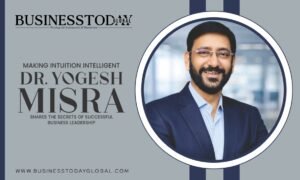
“A childhood friend of mine called me not long ago. Thirty years of knowing each other, and I’d watched him build a formidable career. Driven, sharp, never short of ambition. Yet the corner office kept going to someone else. He asked me directly: ‘What am I missing?’ I’ve heard versions of that question more times than I can count. In my experience, the answer is almost always the same, not capability, not credentials, not effort. It comes down to self-awareness,” says Dr. Yogesh Misra.
Leaders don’t fail due to lack of intelligence or ambition. They fail when they struggle with emotional regulation under pressure, become rigid as complexity increases, and don’t adapt their behavior as roles scale.
He continues that the cost isn’t just personal. It shows up as disengaged teams, trust deficits, and stalled execution. Leaders with high emotional intelligence, on the other hand, consistently create stronger engagement, higher trust, and better decisions when it matters most.
“This is why assessment-led feedback matters. It creates mirrors that leaders cannot ignore. Because growth doesn’t start with capability, it starts with self-awareness,” he explains.
A Vast Journey of Gaining Deeper Insights into Self-Awareness
When he entered the profession in June 1999, on the cusp of a new millennium, most of the business world was focused on Y2K, the internet boom, and the opportunities created by a rapidly digitizing economy. Very few people were talking about behavioral science, leadership assessment, or evidence-based people decisions. In fact, most organizations in India viewed psychometric assessments as a curiosity at best and a luxury at worst.
“The honest truth was that we were building a market that didn’t yet know it needed us.” “Early in my career, a senior executive from one of the most respected Indian conglomerates asked me whether psychometric assessments were any different from astrology or sun-sign predictions. That was how many people viewed the field then. Behavioral science was unfamiliar, and assessments were often seen as interesting but not necessarily credible. Yet once leaders saw their own profiles and the accuracy of the insights, perceptions changed remarkably quickly.” Every time he sat down with a leader and helped them understand themselves better, he saw the power of self-awareness in shaping decisions, careers, and organizations.
Over the next twenty-seven years, Dr. Yogesh says he had a front-row seat to multiple shifts in the business landscape. “We moved from the Y2K era and the internet revolution to globalization, the financial crisis, and eventually the disruption of COVID-19.” For much of that journey, leaders spoke about navigating a VUCA world, one that was volatile, uncertain, complex, and ambiguous.
Around the pandemic, many organizations found themselves operating in what is increasingly described as a BANI environment: brittle, anxious, non-linear, and incomprehensible. “In leadership reviews, I’ve often seen capability mistaken for readiness. The hardest transitions are rarely about skill gaps; they’re about behavioral shifts as scale, complexity, and pressure increase.”
That advisory experience spanning enterprises, government institutions, multilateral organizations, and engagements across 27 countries shaped his leadership philosophy. It taught him that the hardest sales call isn’t to a skeptic; it’s to someone who has never had to question their own judgment. Leadership, in its truest form, is about continuity along with clarity.
A Continuously Evolving Business Leadership
Today, Dr. Yogesh is the Chief Executive Officer at Thomas Assessments Pvt. Ltd., part of the CIEL HR Group, one of India’s fastest-growing talent and workforce solutions enterprises with annual revenues exceeding ₹2,000 crore. He has spent more than two decades helping shape the organisation’s growth and evolution, moving from consultant to business leader with full P&L responsibility. His role today reflects not only his experience in behavioural science and leadership assessment, but also his responsibility for growth, market expansion, commercial outcomes, and enterprise performance.
“Within Thomas Assessments itself, that same lens shaped how he built the business — expanding the consulting practice, opening new markets, leading commercial teams, and scaling revenue across geographies. Each of those decisions, in hindsight, was as much about people as it was about strategy.”
Alongside these responsibilities, Dr. Misra has remained closely connected to management education, teaching Strategic Human Resource Management at the Indian Institutes of Management. The classroom offers a valuable perspective, bringing together emerging management thinking and the practical realities of running and scaling businesses. The interaction with future leaders constantly challenges assumptions and keeps learning a two-way process.
Over the years, his responsibilities expanded far beyond advisory work, building consulting practices, expanding markets, leading commercial teams, and driving business growth across geographies. That experience reinforced a conviction that continues to shape his thinking: people decisions are not separate from business performance. They influence growth, innovation, customer outcomes, execution quality, and ultimately enterprise value.
His philosophy is simple: every great organization runs on decisions. The quality of those decisions, especially about people, determines whether growth is sustainable or fragile.
The Real Meaning of Transformation
As a leader in talent science and leadership assessment, Dr. Misra feels that defining organizational transformation in today’s rapidly evolving business environment is very necessary. Transformation is often misunderstood as restructuring, technology implementation, or process redesign. In reality, transformation is behavior change at scale. An organization truly transforms when leaders think differently, teams collaborate differently, and decision-making improves across the enterprise. Technology can accelerate transformation, but leadership capability determines whether transformation succeeds or fails. The organizations that thrive are those that continuously build adaptability, learning agility, and leadership readiness rather than treating transformation as a one-time initiative. Ultimately, transformation begins when organizations are willing to challenge assumptions with evidence and make better decisions as a result.
Honesty, the High Performance Policy
Yogesh adds that this transformation requires honesty before it delivers results. When it comes to leadership assessments, behavioral intelligence, and talent analytics contribute to creating high-performing and resilient organizations; think of them as institutional memory about your people. When behavioral intelligence is integrated into how an organization hires, develops, promotes, and deploys talent, it creates a cumulative understanding of what leadership success looks like within that specific context. Leadership and competency assessments provide insight into behavioral preferences and potential. Talent analytics identifies patterns and risks. Behavioral intelligence improves collaboration, communication, and self-awareness. Over time, this becomes a genuine competitive advantage. The most resilient organizations are rarely those with the most talented individuals. They are the ones who understand their people most clearly.
That understanding doesn’t come from the classroom, and it is the classroom he has watched most future leaders form their earliest assumptions about what performance actually means. As someone who teaches at the IIM alongside running a commercial business, he occupies an unusual vantage point: he sees tomorrow’s senior leaders before the corporate world does. What he observes across both rooms is a consistent gap. One assumption he encounters repeatedly among students on the cusp of their first serious leadership roles is that the class topper will be the corporate performer, academic rank as a proxy for leadership potential. What the classroom cannot easily measure, and what twenty-seven years of leadership assessment has shown him repeatedly, is that the executive who sustains performance is rarely the one who was individually brilliant. It is the one who could take people along. That gap is invisible until you watch a high-potential leader derail at the Director level because they optimized for being right rather than for being followed. There is a second assumption worth challenging: that people resist uncomfortable truths. In his experience, they don’t, provided the truth is visibly in their interest. The resistance isn’t to honesty; it’s to honesty that feels like judgment. When leaders learn to separate the two, the conversation changes entirely. The classroom teaches you to solve the problem. The boardroom teaches you that the problem is usually the people, and the people are usually willing, if the mirror is held with the right intent.
Decision-Grade Choices for People
Dr. Yogesh often speaks about enabling decision-grade choices for people. In finance, no CFO would commit capital without data. In operations, no business leader would redesign a process without measurement. Yet for decades, leadership hiring, succession planning, and promotion decisions, decisions carrying enormous organizational risk, were often made largely on intuition. Decision-grade choices for people simply mean applying the same rigor to talent decisions that organizations already apply to financial and operational choices. In practice, it means understanding not only whether a leader has performed, but why. What behavioral drivers, cognitive patterns, and emotional tendencies produced that performance? Which of those attributes will transfer successfully into a larger or more complex role? The goal is to make intuition intelligent rather than replacing it. When organizations systematically identify potential, assess leadership readiness, and build succession pipelines based on evidence rather than politics, they reduce risk and accelerate growth. The difference between a good year and a great decade can often be traced back to a handful of critical leadership decisions made with real intelligence rather than informed optimism.
The Age of Human-Powered AI
Leadership today, says Dr. Misra, is being redefined by uncertainty, AI, hybrid work, and changing workforce expectations. The leaders who will define the next decade are those who can hold uncertainty without either freezing or oversimplifying. Technical expertise remains important, but learning agility has become even more critical. Leaders who are ready for the future build authority on the quality of their questions.
The intersection of Artificial Intelligence and talent management is evolving rapidly. AI is an extraordinary tool for pattern recognition, and talent management will benefit enormously from it. It can help identify early indicators of leadership potential, personalize development pathways, improve succession planning, and generate richer insights from workforce data. However, there is a boundary that leaders must understand. Behavioral science deals in nuance, context, and the irreducibly human. AI can surface patterns, but it cannot replace the judgment required to interpret those patterns within the lived reality of an organization. The leaders who will use AI most effectively are those who understand its outputs deeply enough to challenge them. The risk is not that AI gets it wrong. The risk is that we stop asking whether it did.
The Three Blind Spots
Having advised over 1,500 enterprises across industries in 27 countries, he identified three blind spots that recur with remarkable consistency when it comes to leadership inefficiencies that hinder organizational transformation. The first is proximity bias, the assumption that visible and vocal leaders are necessarily high-potential leaders. Organizations often over-invest in those who manage upward effectively while overlooking quieter contributors who consistently deliver results. The second is retrospective bias. Leaders are often evaluated based on what they have already accomplished rather than whether those capabilities will transfer successfully to a different context, scale, or level of complexity. The third, and perhaps most damaging, is comfort with comfortable feedback. Senior leaders frequently receive filtered information. The organizations that transform successfully are those willing to surface uncomfortable truths about leadership capability early enough to act on them.
Tackling Truths and Realizing Realities
In his experience, what separates organizations that successfully transform from those that struggle is almost never resources, and it is rarely strategy. The differentiator is the willingness to make uncomfortable truths visible. Every organization possesses signals about where leadership capability is strong and where it is vulnerable. The organizations that transform successfully are those whose leaders confront those realities directly and act on them, even when doing so challenges long-held assumptions or difficult political realities. Frameworks help organizations name reality, but transformation begins when leaders stop explaining away difficult truths and start acting on them. The organizations that struggle often manage the politics around the findings rather than addressing the findings themselves.
As someone deeply involved in enterprise growth strategy, Dr. Misra finds that commercial outcomes and people-centered leadership decisions are rarely in conflict. One of the most expensive commercial mistakes an organization can make is a poor leadership decision. The cost extends far beyond compensation. It affects engagement, retention, execution quality, customer outcomes, and organizational culture. When leadership decisions are viewed through the lens of risk management and long-term value creation, the commercial case for people-centered leadership becomes very clear.
Three Constant Lessons
Three leadership lessons have remained remarkably constant throughout his career, despite dramatic shifts in business models and workforce dynamics. First, trust remains the foundation of effective leadership. Second, psychological safety is a performance variable rather than merely a cultural nicety, teams where people cannot speak uncomfortable truths consistently underperform. Third, patience stops being a virtue and becomes a way of operating. Sustainable leadership is often less about speed and more about consistency over time. Technology changes. Markets change. Human nature changes far more slowly.
For aspiring HR, talent, and business leaders looking to make a transformational impact, the most important mindset shift, as the CEO advises, is to stop treating people data as HR’s property. Leadership capability, culture, succession readiness, and workforce effectiveness are business issues, not functional ones. Leaders who understand the behavioral architecture of their organizations will make better decisions than those who do not. Future leaders must combine behavioral understanding with commercial acumen, technological literacy, and strategic thinking. Most importantly, they must remain curious enough to challenge their own assumptions.
Scaling Talent Science Across India
Yogesh believes talent science will become increasingly integrated into business strategy. Organizations will use behavioral intelligence, advanced analytics, and AI to make more informed, equitable, and future-focused leadership decisions. The organizations that will define Asia’s next growth decade are those that treat behavioral data as a strategic asset, with the same discipline, governance, and intent that they apply to financial capital.
India is at an inflection point. “We have the demographic scale, the ambition, and increasingly the institutional sophistication to lead this transformation. If the first phase of my career was about helping organizations trust behavioral science, the next phase is about helping them scale that intelligence across every consequential leadership decision.”
As leaders and organizations become increasingly driven by data, Dr. Yogesh adds that they must not lose sight of a more fundamental question: more than what can be achieved, what is worth achieving. “The future of leadership will depend on our ability to combine intelligence with judgment, performance with purpose, and technology with humanity,” he concludes.