
The Light-Driven Mind of a Technovator: How Dr. Ko-Cheng Fang Is Shaping the Future of Healthtech 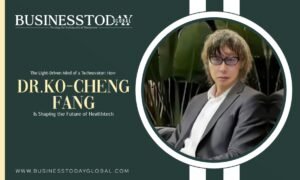
Yesterday’s fiction is today’s reality. Can today’s fiction become tomorrow’s reality? Dr. Ko-Cheng Fang, the world-renowned inventor, artist, entrepreneur, scientist, and the Founder and Chairman of LongServing Technology, established in Taipei in 2010, not only believes but has already been pursuing and so far has discovered many groundbreaking technologies to make today’s science fiction into the future’s everyday reality. The multidimensional convergence happens when Dr. Ko-Cheng Fang is pushing the global technological frontiers and alters the core trajectory of the global technology sector. He achieves it by merging physics, computing, life sciences, and fine art into a single operational system. As his multi-disciplinary mindset guides a corporate engine dedicated to frontier research and development, Dr. Ko-Cheng Fang views scientific innovation not merely as a mechanism for market dominance but as a foundational asset to elevate the everyday quality of human life. His diverse inventions span legacy digital protections, advanced manufacturing, and deep medical research, proving that complex physical principles can yield highly practical solutions when evaluated with creative clarity.
His early industry milestones reshaped data distribution, introducing foundational technologies like cloud-based storage networks, secure digital firewalls, and early application lock systems that shifted user computing models from physical hardware to virtual environments. Across 2026, he guides his engineering and research teams to advance these technical dimensions further, challenging the limits of traditional binary computing. LongServing positions itself as a global leader in international technical integration, using an agile business model built on patent licensing and authorized cooperative production to deploy its vast intellectual property portfolio directly into the world’s most competitive industrial markets.
Harvesting Photonic Intelligence: Replacing Electrons with Light-Driven Calculation
Dr. Ko-Cheng Fang actively shifts the focus of the artificial intelligence hardware market by introducing high-performance alternatives to traditional silicon-based semiconductors. He addresses a critical industry constraint: modern automation and large-scale AI networks face extreme energy consumption and structural limitations because they rely on low-level binary algorithms and standard electron movement. To bypass this barrier, his laboratory developed a unique photonic quantum multi-bit computing chip powered by his proprietary X-Photon material, which emits light at a precise two-nanometer wavelength. This material innovation allows data processing to happen via light waves, accelerating calculation speeds by hundreds of thousands of times while radically lowering power requirements.
This light-driven computing method alters the roadmap for automated machinery and intelligent robotic systems. Dr. Ko-Cheng Fang coordinates specialized planners across multiple divisions to integrate this picoscopic-scale electronic process into advanced robotic frameworks, aiming to deliver true autonomous learning capabilities within the next three to five years. LongServing avoids the complex vacuum manufacturing requirements of traditional electronic chips, developing alternative atmospheric processes that reduce production costs and eliminate common dust contamination risks. By making this 3D photonic chip architecture available for co-production, his firm provides global device manufacturers with a sustainable hardware setup to run complex industrial algorithms smoothly.
The Material Mimic: Advanced Geologies and Molecular Medical Inventions
The operational scope of LongServing extends far beyond data processing, showing that material sciences can revolutionize consumer luxury and environmental health simultaneously. Dr. Ko-Cheng Fang utilized his artistic sensibilities and understanding of geological dynamics to invent the world’s first successful method for mass-producing gem-grade synthetic jadeite. By mimicking nature’s intense volcanic processes through controlled cycles of alternating pressure and temperature, his team replicates the exact physical hardness, brilliant chromium coloration, and glistening aesthetic value of imperial green minerals. This process satisfies rising consumer demand while preventing the environmental degradation associated with traditional gemstone mining.
In the life sciences division, Dr. Ko-Cheng Fang applies this same microscopic structural analysis to combat aggressive diseases, developing targeted biotechnology pharmaceuticals derived from organic essential oils. His research groups extract bioactive plant compounds that strengthen the human immune system and disrupt viral replication mechanisms, achieving high-efficiency clearance rates against target cells in recent sample tests. LongServing uses Taiwan as a highly stable testing and production foothold, inviting international corporations, software developers, and industrial partners to collaborate on these diverse innovations. By keeping every research track focused on measurable human benefit, his corporate groups continue to scale their testing metrics, ensuring that modern technical capabilities remain closely aligned with global sustainability goals.
The Healthtech Innovator in Discussion with The Business Global Today
When you began your journey in healthcare innovation and biotechnology, what was your original vision, and how has that vision shaped the way you approach improving human health and patient care today?
We know that one of the most widely used “universal medicines” for fighting infections today is antibiotics. In fact, antibiotics also come from nature, produced through the fermentation of fungi and bacteria. Natural plant antibiotics and phytochemicals can have similar effects. For example, tea tree essential oil has shown antibacterial properties.
Many biotechnology companies have also tried to extract anti-cancer compounds from plants. One well-known example is moringa from India. Moringa does show some ability to suppress tumor cells, but it also carries natural toxicity risks. For example, moringa root may cause miscarriage, while moringa seeds may place stress on the liver and kidneys.
Another commonly studied plant is Camptotheca acuminata. The entire plant contains a highly toxic compound called camptothecin. It mainly works during cell division by inhibiting DNA synthesis. However, it is also highly toxic to the human body and may cause nausea, vomiting, diarrhea, dizziness, and other severe side effects. Because of its cytotoxicity, it can kill cells and may also damage liver and kidney function. Even so, it has been developed into anti-cancer drugs such as CPT-11, which is used to treat colorectal cancer.
In addition, the Pacific yew tree produces paclitaxel, which is used to treat breast cancer, ovarian cancer, and non-small cell lung cancer. However, paclitaxel also comes with many toxic side effects. One of the most serious is bone marrow suppression, which can lower white blood cell counts and even lead to life-threatening infections. Today, these types of drugs remain the mainstream approach in chemotherapy treatment. In many ways, modern cancer treatment still relies on the principle of “fighting poison with poison.”
When I first entered the field of anti-cancer drug research, I kept thinking about one question: Is it possible to find one plant extract, several plant extracts, or even dozens of natural plant compounds that can fight cancer without damaging healthy cells?
https://longserving.com.tw/en/Bio-Tech/
Of course, this is also the most difficult challenge and the most time-consuming part of the research. It is possible to spend an entire lifetime researching, only to end up with emptiness, disappointment, and helplessness.
Fortunately, I have maintained a spiritual meditation practice for decades. Through deep meditation, I believe I can gain insight into the future. When such an ability is applied to scientific and technological research, it can help achieve results and even accelerate progress.
Today, many people are impressed by AI’s database search and computational abilities. They hope AI can help develop anti-cancer drugs. In theory, this sounds promising, but the outcome may also be harsh, because AI databases still depend on knowledge created by humans. When facing completely unknown discoveries, AI may also have limitations.
Another area of development is the use of mRNA vaccines for cancer treatment. However, RNA is extremely unstable and can easily be broken down by enzymes inside the body. This is why it must be wrapped in lipid nanoparticles (LNPs). In addition, current LNP technology still struggles with tissue targeting. It is difficult to deliver drugs only to cancer cells, and the particles may accumulate in organs such as the liver, causing unintended effects.
Another challenge is storage. Most mRNA products require ultra-low temperatures, such as -20°C or even -70°C. Beyond that, there is an even greater challenge: cancer mutations vary from person to person. Every patient’s tumor cells are different, making personalized treatment extremely expensive. Tumor neoantigens are unique in each individual, and the immune microenvironment may even suppress immune cells, causing them to “surrender” before fighting the cancer.
This is why cancer is one of the greatest threats of this century. Fighting it is extraordinarily difficult. Unlike ordinary researchers, I believe I can use my predictive abilities to rapidly screen different plant extracts. By combining them according to the Five Elements principles of traditional Chinese medicine, I aim to create formulations that can defeat cancer cells without harming normal human cells.
As you can see, in laboratory experiments, this research has successfully suppressed most types of cancer cells and, in some cases, completely destroyed them while allowing healthy cells to survive. Through probe injection systems and nanotechnology — which are equally important breakthroughs — I have been able to keep the medicine inside cancer cells successfully, without causing the high-dose toxic side effects seen in traditional chemotherapy drugs. I hope this technology can become a major breakthrough for cancer patients by lowering treatment costs while also reducing the severe side effects that many patients suffer today.
You have often emphasized that technology should serve humanity rather than simply generate profit. In healthcare, what does meaningful innovation look like to you?
Technology should serve humanity. For example, better AI tools can make smartphones more convenient to use, improve image generation and visual effects, and create faster and safer autonomous driving systems. These innovations help people enjoy a more comfortable and convenient life. In many ways, technology is meant to increase human happiness and quality of life.
But cancer is different. Cancer is not simply a technological challenge — it is a survival crisis. Around the world, many countries are facing aging populations, while birth rates continue to fall below death rates. This has already become a major issue for many advanced nations.
That is why the development of anti-cancer biotechnology is so important. It is not only about creating medicine, but about extending human life and helping people live healthier lives from beginning to end.
At the same time, the growing gap between rich and poor has become one of the world’s most serious social problems. Poor families often lose access to proper medical care, while governments struggle under the enormous financial burden of cancer treatment and healthcare welfare systems. The cost of cancer medicine is simply too high for many patients and healthcare systems to sustain.
Reducing medical costs must therefore become a top priority. I hope this technology can help countries around the world lower healthcare burdens. I also hope to establish herbal cultivation regions in different countries to reduce production costs for anti-cancer medicines.
The ultimate goal is to make cancer treatment truly accessible, reduce the barriers created by poverty, and deliver medicine directly to patients in need. Even the poorest patients should still have an equal right to survive.
The key technology behind this approach is the use of probe injection systems and nanotechnology. By delivering our anti-cancer medicine more precisely into cancer cells, we can significantly reduce the required dosage while also minimizing harmful side effects.
What motivated you to enter the field of cancer research, and what challenge were you most determined to address?
Almost everyone around us has known someone affected by cancer. Cancer cells are like hidden time bombs. Sometimes they appear to be suppressed, but they may suddenly spread to another organ without warning. No one truly knows when death may come calling.
I have seen wealthy people willing to give up all of their fortune in exchange for a little more time to live, yet many of them still could not escape the final outcome.
For decades, prophets and visionaries have said that humanity would eventually discover a way to defeat cancer in this century. Yet as time passes, people are still waiting. Pharmaceutical companies continue to announce new breakthroughs and offer new hope, but in many cases, the result is only a slightly higher survival rate or a few more years of life, while patients continue waiting for a miracle.
Deep down, humanity is still not satisfied with current cancer treatments, are we? If we truly had victory over cancer, why does the shadow of death from cancer still remain over humanity?
This is the main reason why I chose to take on this challenge. To me, it feels like a fight in the arena of life itself.
“More… more… who will be the next challenger?” It is as if death itself is calling. And so, I stepped into the arena, willing to take on the challenge and the responsibility.
Cancer care often involves invasive procedures and difficult recovery journeys. How does your vision for nanotechnology-based targeted treatment aim to improve both survival outcomes and the patient experience?
From the very beginning, I already had an answer to this problem.
At the start of my research, I deliberately excluded toxic plant extracts. I studied complex plant phytochemicals, their growing environments, whether they carried toxicity, what side effects they might have, and how people had traditionally used them over long periods of time. I also researched their functions and medicinal properties.
I searched through thousands of Eastern and Western medicinal herbs, combined them in different ways, applied nanotechnology, and carefully selected solvents to achieve the best absorption rate for human cells. After building the theory, I brought everything into the laboratory for real-world testing.
The results were almost exactly as I had predicted. There was no need for repeated adjustments. It worked correctly from the very first formulation. In laboratory testing, the cancer cells were almost completely eliminated.
This was very different from my experience developing lab-grown jadeite materials. My jadeite creations were built through thousands — even tens of thousands — of failures. Every time I entered the high-temperature furnace, the materials had to endure temperatures above 1,400 degrees Celsius under extreme pressure. Those results were born from very harsh conditions and endless experimentation.
But my anti-cancer formulation came from years of accumulated pharmacological knowledge and logical analysis. Because of that, the formulation process was achieved in a much more direct and precise way.
Was this a miracle?
Not exactly.
Behind every so-called miracle is accumulated knowledge and rational judgment. As I mentioned earlier, after the medicine is implanted, cancer cells may die within three days. But what if the cancer spreads or returns? Then the treatment can be locally injected again. Using probe injection technology, phytochemicals can be delivered directly into the cancer cells to destroy them and suppress further spread, without the need for major surgeries such as removing parts of the liver or kidneys. For cancer patients, this could truly become a major breakthrough and a source of hope.
Preventive healthcare is becoming just as important as treatment itself. How do you believe science and technology can help healthcare systems focus more on prevention rather than only intervention?
Traditionally, herbal medicine in Eastern medicine has focused more on prevention rather than treatment. It places great importance on daily wellness and the philosophy of maintaining balance in life.
For example, the ancient Chinese text “Huangdi Neijing” (The Yellow Emperor’s Inner Canon) is not only a medical work, but also a combination of Eastern philosophy and pharmacology. In comparison, the more widely known “Bencao gangmu” (Compendium of Materia Medica) is closer to an encyclopedia of herbal medicine.
However, traditional Chinese herbal knowledge was limited by geography and historical conditions. Different regions of the world have different climates, environments, and native plants. Because of this, Eastern herbal medicine alone cannot fully represent the entire world’s botanical knowledge.
In the West, much of the practical wisdom of herbal therapy has been preserved through aromatherapy practitioners and natural healing traditions. I believe both Eastern and Western approaches are necessary in order to truly understand the full essence of herbal medicine.
At the same time, both Eastern and Western herbal traditions place strong emphasis on prevention and long-term wellness.
For example, when people feel stressed or emotionally restless, they often use lavender essential oil. One of its main active compounds, linalyl acetate, helps calm the nervous system and activate the parasympathetic nervous system, allowing the body to relax.
In the East, sandalwood has long been regarded as a sacred natural calming remedy. Its deep woody fragrance and gentle creamy scent are believed to soothe tension, reduce anxiety, and help the brain shift into a resting state. It is often used to calm the mind and improve insomnia and emotional stress.
Eastern and Western traditions may use different herbs, but both recognize the same principle: when the mind is at peace, the body also becomes healthier. The body and mind are deeply connected. Many cancer patients live under constant pressure, anxiety, overwork, and unhealthy dietary conditions. In many cases, the development of cancer can be influenced, predicted, and potentially controlled through healthier living and preventive care. If people truly understand the principles of wellness and balance, they may greatly reduce the risk of disease before it begins.
Sustainability is a major concern across industries, including healthcare. How do you ensure that medical innovation remains both clinically effective and environmentally responsible?
That is why I mentioned earlier that cultivating medicinal herbs is the first step.
In many ways, Western countries have done an excellent job in this area. For example, the European Union’s organic certification standards give consumers confidence when purchasing herbs that are free from industrial pollution and pesticide contamination. This plays a very important role in sourcing raw materials and cultivating safe medicinal plants.
In the East, however, these systems are still developing. Take chrysanthemum tea as an example, which many people drink regularly. Traditionally, it is believed to help clear internal heat, detoxify the body, calm the liver, improve eye health, and relax the mind. But today, consumers often have to carefully screen the source of these herbs themselves, worrying about contamination from industrial heavy metals or pesticide residues used to increase agricultural production. These hidden toxins may remain inside the plants. Compared with Western pharmaceutical standards, traditional herbal medicine in many regions still lacks equally strict inspection and quality control systems.
For this reason, our long-term vision is to work directly with contracted farms and eventually cultivate medicinal herbs ourselves. Only by controlling the entire process — from planting and harvesting to extraction and manufacturing — can we truly guarantee the quality and safety of herbal medicine.
This is also our expectation for the company’s long-term sustainability and responsible development.
Your approach combines science, creativity, and long-term thinking. How has this perspective influenced the way you develop healthcare solutions, especially in complex areas like cancer treatment?
When facing any problem, I prefer to stay calm, reflect deeply, and then search for a solution.
My philosophy in technology is simple: the ideas of previous generations — or even the current mainstream view — are not always correct. Because if those ideas were already correct, then the problem would have been solved long ago. Why would someone like me still need to step in?
Very often, when we inherit the experience and wisdom of others, we also inherit their mistakes.
Take herbal medicine as an example. Most people would say, “If traditional herbal medicine could truly cure cancer, then medical experts and researchers from the past would have already developed it.” After all, there have been countless doctors and scientists throughout history. But if we accept that something is impossible, isn’t that the same as accepting defeat?
When I was researching synthetic jadeite technology, people told me the same thing. People would often say to me, “Companies like the US GE company and laboratories such as the Changchun Institute of Applied Chemistry in China had already tried and failed. Are you really going to challenge the technological power of both China and the United States that even they could not achieve?”
But my belief has always been this: if nature can create something, then humanity can also create it. We simply have not yet found the correct path.
After experiencing thousands of failures in the laboratory, I gradually learned from those mistakes and discovered the patterns behind success. In a way, jadeite itself became my teacher. Over time, I began to understand what kind of environment jadeite “likes,” and under what conditions crystals can grow rapidly.
The same principle applies to cancer cells. If we understand what kind of environment cancer cells dislike, then we can intentionally create those conditions. For example, changes in pH levels, or certain phytochemicals that prevent cancer cells from growing while having little or no harmful effect on normal human cells.
This is the power of inductive reasoning — observing patterns, drawing conclusions, and then applying logic step by step.
Chip development follows the same principle. When companies like TSMC have already pushed electronic chips close to their physical limits, why continue competing in the same direction?
That is why I chose to develop photonic chips — using the speed of light itself to surpass traditional electronic computing power. The logic is clear, and the next step is to turn that logic into reality.
Knowledge learned only from textbooks is not true wisdom. Much of it is simply memorization. AI can already do that better than humans. In fact, I believe humans will eventually be replaced by AI in many routine tasks.
A robot can perform needle injections more precisely than a human. AI can analyze massive amounts of medical data and determine medication strategies. But these things alone are not true innovation. They can all eventually be replaced by AI.
True science and technology must come from original creation. Creativity is the highest form of knowledge. And that is the complete philosophy behind my development of anti-cancer medicine and probe-based therapy technology.
You believe inventors and leaders carry moral responsibility for the impact of their work. How important is ethics in healthcare innovation when developing treatments that could affect millions of lives?
If profit becomes the only goal while medical ethics are ignored, then many people will focus only on impressive treatment data and short-term results in order to push a drug onto the market. Under that mindset, anti-cancer drug development can easily become centered on using extremely aggressive medications — even the idea of “fighting poison with poison” — simply to achieve the strongest visible effect against cancer cells in the shortest amount of time. In many cases, the long-term damage to the liver, kidneys, and other organs may be overlooked, even when that damage is severe or irreversible. This is also why modern drug approval systems require long-term observation and strict regulation before new medicines can be accepted.
For many late-stage cancer patients, what current medicine often offers is not a complete cure, but only more time. Sometimes, if a targeted therapy can extend life by three to five years, it is already considered a success.
But that is not the path I personally want to pursue. Human beings have consumed herbal medicine for thousands of years. In many ways, our bodies and genes have gradually adapted to certain medicinal plants through long-term coexistence with nature. This is a form of co-evolution. My responsibility is to identify those herbs that evolved alongside humanity — plants that may fight cancer while remaining gentle and safe for the human body. That was my simple belief from the very beginning, and it is the reason I have continued down this path until today.
Of course, there is still a long journey ahead, including large-scale human clinical trials and further scientific validation. But I remain optimistic, because from the very beginning of the screening process, I intentionally selected herbal compounds based on compatibility and synergistic effects with the human body.
Collaboration is essential in medicine. How do partnerships between researchers, healthcare professionals, and investors help accelerate life-changing healthcare solutions?
This question goes directly to the heart of the issue. Without a cooperative ecosystem between pharmaceutical companies, hospitals, and patients, it is difficult to create the additional medical resources needed to advance new treatments.
My view is that we can work within the existing healthcare system by releasing technology shares and building partnerships with medical institutions. In return, hospitals and healthcare networks can provide a continuous stream of volunteer patients who are willing to participate in clinical trials. In this way, patients would no longer need to bear the enormous financial burden of expensive targeted therapies. For many patients who have already given up treatment because they simply cannot afford it, we hope to help carry that burden ourselves.
I believe this is one of the best and fastest ways to deliver anti-cancer medicine directly to cancer patients.
However, there is still one major challenge ahead: long-term funding. We will still need to raise substantial capital through an IPO in order to support large-scale development and future clinical research.
Under Taiwan’s current healthcare and biotech framework, once a company successfully completes Phase I human clinical trials, it becomes possible to apply for listing as an emerging biotechnology company. This is the strategy we are currently working toward. Of course, we welcome interest from domestic and international investment funds, healthcare systems, and medical institutions that may wish to participate or collaborate with us.
At this stage, I believe this is the fastest and most effective path forward.
Looking ahead, what role do you see artificial intelligence and advanced computing playing in transforming diagnosis, treatment, and patient care across the healthcare industry?
As I mentioned earlier, AI computing has enormous potential in medical big data analysis. It can rapidly provide optimized treatment strategies and recommend the best medication approaches based on massive amounts of clinical information.
In the future, highly precise robotic systems may even assist or partially replace traditional diagnostic methods such as pulse examination and acupuncture. Technologies such as infrared sensors, thermal imaging, pulse monitoring, and X-ray imaging can already detect body temperature changes, blood flow, and other physical conditions with great accuracy. These tools could significantly reduce the workload placed on doctors and medical staff.
Today, the shortage of medical resources is no longer only a problem in remote rural areas. It has become a challenge shared by major modern cities around the world. One of the main causes is the rapid aging of populations. As people grow older, chronic illnesses become more common, placing enormous pressure on already limited healthcare systems.
Fortunately, I am also a developer of photonic chip technology. Through the combination of photonic CPUs and photonic memory, the speed of computation and data transmission could potentially increase by more than 10,000 times compared with traditional electronic systems. This level of computing power could greatly accelerate the integration of AI into healthcare collaboration platforms and medical support systems. After completing the development of photonic chips, our company fully intends to focus on building photonic AI robots. Our goal is for these robots to work alongside healthcare professionals within medical systems, helping reduce the burden on doctors, nurses, and medical staff through human-AI collaboration.
https://longserving.com.tw/en/Optical-Quantum-Chips/
When you think about your legacy in healthcare and medical innovation, what lasting contribution do you hope your work will leave for future generations of patients and researchers?
Humanity’s ultimate goal may one day be to use DNA technology to repair disease and enhance regenerative abilities. But beyond genetic engineering, I believe life-support chambers could also become an important solution for the future.
Because of my belief that I carry memories connected to a past extraterrestrial civilization, I see long-distance interstellar travel as something that will eventually require advanced life-support systems. In such environments, life-support chambers would become essential technologies for sustaining human life over extended periods of time. These systems could potentially regulate blood pressure, heart rate, and other vital functions. They may also one day use brainwave technology to control sleep cycles and awakening periods in a highly precise way.
These are still long-term technologies that will require significant time, research, and development to achieve in the future.