
Dr. Amit Kumar Ghosh: Advancing Functional Neurosurgery and Diagnostic Access Across Eastern India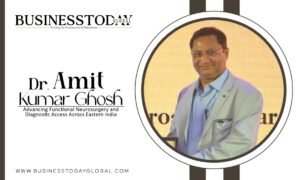
A clinical perspective on precision care, equitable access, and neuromodulation innovation!
The human brain holds billions of neurons firing at a quiet pace. A single impulse can guide a hand, form a thought, or shape a memory. One misfiring circuit can steal movement or silence speech. Families witness loved ones drift into tremors or deal with sudden seizures. Many search for relief, unsure where to turn.
Such situations illustrate a persistent challenge for neurological care across Eastern India. Conditions involving movement disorders, brain tumors, epilepsy, and chronic neuropathic pain often require advanced neurosurgical assessment. Diagnostic limitations in remote communities create harmful delays. For many families, the experience is marked by financial strain, emotional distress, and progressive decline in the patient’s functional abilities.
Amid these realities, clinicians who combine diagnostic precision, long-term vision, and community-focused systems of care hold critical importance. One such clinician is Consultant Neurosurgeon Dr. Amit Kumar Ghosh, whose work offers a clinically rigorous pathway toward improved access and improved outcomes for individuals facing complex neurological disease.
Professional identity and surgical leadership
Dr. Amit Kumar Ghosh serves as Consultant Neurosurgeon at the Institute of Neurosciences Kolkata. Over 2 decades of practice established him as a prominent figure in functional neurosurgery, neuro-oncology, and neuromodulation therapies. His patient care philosophy emphasizes accuracy, individualized planning, and communication during treatment decisions.
His surgical volume demonstrates extensive experience in neurological disease management. His completed procedures include:
- More than 1440 brain tumor surgeries and deep brain stimulation interventions
- More than 3000 brain hemorrhage surgeries
- Annual involvement in approximately 4300 outpatient consultations
These figures indicate a sustained engagement with high-acuity neurological cases within both emergency and elective contexts. They also reflect the increasing demand for specialized neurosurgical care in Eastern India.
Scope of clinical expertise
Dr. Amit Kumar Ghosh manages a wide range of neurological disorders across both cranial and spinal domains. His expertise encompasses:
- Deep Brain Stimulation (DBS) for Parkinson disease, dystonia, tremors, and select movement disorders
- Spinal Cord Stimulation (SCS) for refractory chronic pain
- Epilepsy surgery for medically resistant seizures
- Implantation and programming of Baclofen pumps for spasticity management
- Vagal Nerve Stimulation (VNS)
- Microsurgical resection of brain tumors
- Treatment of writer’s cramp and related conditions
These interventions require precision in electrode placement, anatomical navigation, perioperative evaluation, and long-term device optimization. Dr. Amit Kumar Ghosh is recognized for integrating neuromodulation technologies with person-centered assessment to improve quality of life for patients previously limited by persistent neurological impairment.
Training and interdisciplinary grounding
Dr. Amit Kumar Ghosh trained at leading medical institutions in India, Japan, and the United Kingdom. This international exposure reinforces a clinical perspective grounded in evidence-based practice and cross-cultural approaches to complex neurosurgery. These experiences inform his application of advanced medical technologies within Indian settings.
His approach emphasizes continuous learning, adoption of emerging neuromodulation techniques, and structured mentorship. His work shows a commitment to preparing future neurosurgeons for the increasing prevalence of neurological disease in aging populations.
Clinical environment and systems of practice
Within the Institute of Neurosciences Kolkata, Dr. Amit Kumar Ghosh heads the Brain and Spine Clinic. The clinic aims to deliver multidisciplinary evaluation, individualized treatment planning, and advanced diagnostics. Care is provided through coordinated teams including neurosurgeons, neurologists, anesthesiologists, imaging specialists, nurses, and technologists.
Patients and caregivers report improved understanding of treatment options through detailed consultation. Clinical decision-making includes assessment of quality of life outcomes, especially for neuromodulation procedures where postoperative programming and follow-up determine long-term efficacy.
The clinic maintains a standard of individualized and advanced care for patients with complex neurological disorders. Additionally, Dr. Amit Kumar Ghosh mentors young doctors and participates in developing functional neurosurgery standards within the region.
Neuromodulation and patient empowerment
Deep Brain Stimulation and Spinal Cord Stimulation technology continues to evolve. For individuals with Parkinson disease, dystonia, essential tremor, and refractory chronic pain, DBS and SCS offer functional restoration that medications alone cannot provide. As one of the distinguished practitioners offering these advanced procedures in Eastern India, Dr. Amit Kumar Ghosh expands therapeutic options for patients who previously lacked access to neuromodulation interventions.
DBS and SCS require ongoing postoperative monitoring, device programming, and collaborative care among neurologists and neurosurgeons. This patient-centered process reflects Dr. Amit’s emphasis on partnership in treatment decisions. He prioritizes informed consent, communication, and shared evaluation of risks and benefits.
Diagnostic equity and community access initiatives
A persistent threat to neurological outcomes in India is delayed diagnosis. Geographic barriers, limited regional imaging facilities, and insufficient access to electrophysiological testing contribute to late treatment. Dr. Amit Kumar Ghosh recognizes these systemic challenges and articulates them publicly. In his own words:
“It pains me to see neurological patients from remote villages suffer undiagnosed.”
In response, he established Shree Asoka Neurocare and Shree Asoka Healthcare Foundation.
- Shree Asoka Neurocareexpands diagnostic access through strategically located facilities in Kolkata and remote regions, reducing travel burdens.
- Shree Asoka Healthcare Foundationdelivers diagnostic services free of charge to underserved communities.
These services include NCV, EMG, EEG, Video-EEG, Long-Term Video EEG, RNST, VEP, and BAEP. Through these initiatives, early detection becomes feasible for patients who once faced prohibitive geographic and financial barriers. The director-technician-manager system ensures standardized practices, patient support, and affordable care delivery.
Comprehensive epilepsy care vision
Epilepsy remains underdiagnosed and stigmatized in many parts of India. Patients face reduced social inclusion, limited employment, and prolonged untreated seizure episodes. Dr. Amit Kumar Ghosh advocates for long-term solutions that integrate biomedical, psychosocial, and educational interventions.
He proposes Shree Asoka Comprehensive Epilepsy Care Centre, envisioned as a future Center of Excellence. The centre aims to provide:
- Medical and surgical epilepsy management
- Long-term monitoring
- Psychosocial support services
- Public and clinician education
- Epilepsy stigma reduction initiatives
- Advanced epilepsy surgery for difficult-to-treat cases
- Training for rural healthcare workers
- Multidisciplinary research
He describes this movement in collective terms:
“Support, help, and cooperate.”
The proposed centre integrates treatment and research, aiming to raise diagnostic accuracy, improve patient outcomes, and increase awareness.
Research priorities and technological integration
Dr. Amit Kumar Ghosh advances neurosurgical knowledge through research initiatives focusing on clinical outcomes, cost-effective techniques, and patient quality of life. His objective includes strengthening applied and basic science research in areas tied to neuromodulation, epilepsy, chronic pain, and spasticity.
He states: “Research and development can help us create cost-effective diagnostic and treatment strategies.”
His clinical innovation includes adoption of advanced neurosurgical tools, perioperative imaging, device programming protocols, and neurophysiological monitoring. Such innovations allow the Institute of Neurosciences Kolkata to offer interventions comparable to international medical centers.
Awards and external recognition
Dr. Amit’s work has received national recognition for clinical excellence and service orientation. Among his awards are:
- Mother Teresa Sadbhavana Award (2013) from the Global Achievers Foundation, New Delhi
- Indian Achiever’s Award for Chikitsak Ratna (2013) from the Global Society for Health and Educational Growth
- Outstanding Clinician in Neuro-Surgery Award (2018) from the Venus International Foundation
These awards confirm professional excellence, patient advocacy, and contribution to Indian neurosurgery.
Conclusion
Neurological disease presents complex clinical, economic, and psychosocial challenges. The need for accurate diagnosis, multidisciplinary treatment, and innovative neuromodulation strategies in resource-variable contexts remains pressing. Through his clinical practice, mentorship, research, and outreach, Dr. Amit Kumar Ghosh addresses these needs through structured initiatives grounded in precision, accessibility, and patient involvement.
Families from remote areas who previously lacked services now access diagnostic support closer to home. Patients with Parkinson disease, dystonia, epilepsy, or chronic pain obtain advanced interventions including DBS, SCS, VNS, and epilepsy surgery. Younger clinicians benefit from training and mentorship.
His ongoing work represents a measurable contribution to the advancement of functional neurosurgery and diagnostic accessibility in Eastern India. For further details, refer to https://dramitkumarghosh.com/